
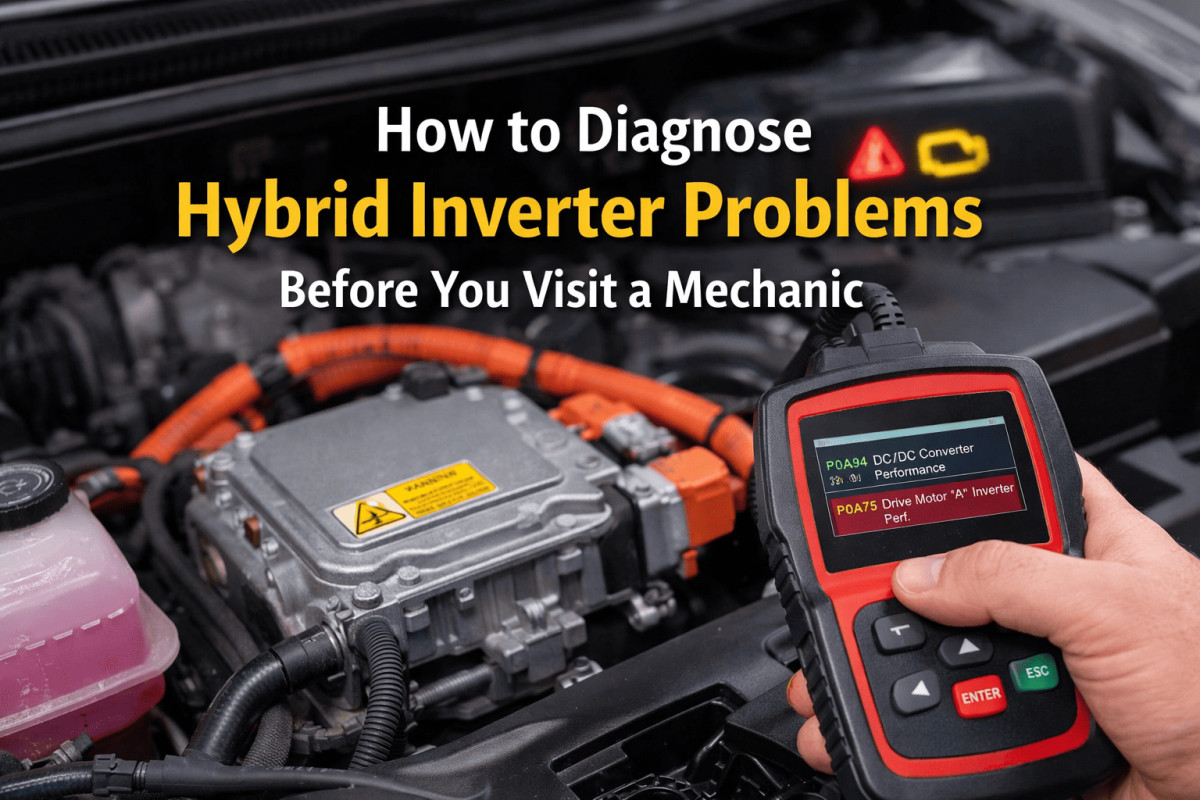
Hybrid vehicles like the Toyota Prius are known for their reliability, fuel efficiency, and advanced technology. One of the most critical components in a hybrid system is the inverter. If it starts to fail, your vehicle’s performance can quickly decline. Understanding how to diagnose hybrid inverter problems before visiting a mechanic can save you time, stress, and unnecessary repair costs.
In this guide, we’ll walk you through the warning signs, simple diagnostic steps, and what to do next.
What Does a Hybrid Inverter Do?
In models like the Toyota Prius, the inverter plays a vital role in converting DC (direct current) electricity from the high-voltage battery into AC (alternating current) to power the electric motor. It also converts AC back into DC to recharge the battery during regenerative braking.
Simply put, without a properly functioning inverter, your hybrid system cannot operate efficiently — or at all.
Common Signs of Hybrid Inverter Problems
Before you assume the worst, look for these common symptoms:
1. Warning Lights on the Dashboard
If your hybrid system warning light, check engine light, or red triangle warning appears, it could indicate inverter trouble. While these lights don’t always mean inverter failure, they are often early indicators.
2. Reduced Power or Limp Mode
If your vehicle suddenly loses power or enters “limp mode,” the inverter may not be delivering the correct voltage to the motor.
3. Overheating Issues
Hybrid inverters have their own cooling systems. If the cooling pump fails or coolant levels are low, the inverter may overheat. You may notice temperature warnings or unusual smells.
4. Strange Noises
Buzzing or whining sounds from under the hood can signal inverter or cooling pump issues.
5. Poor Fuel Economy
If your Prius is suddenly consuming more fuel than usual, the hybrid system may not be functioning efficiently due to inverter inefficiency.
Step-by-Step: How to Diagnose Hybrid Inverter Problems
While full diagnosis requires professional tools, here are basic checks you can perform before visiting a repair shop.
Step 1: Scan for Error Codes
Using an OBD-II scanner, check for diagnostic trouble codes (DTCs). Common inverter-related codes include:
- P0A94 – DC/DC Converter Performance
- P0A78 – Drive Motor “A” Inverter Performance
- P0A93 – Inverter Cooling System Performance
These codes strongly indicate inverter-related issues.
Tip: Not all basic scanners detect hybrid-specific codes. A hybrid-capable scanner is more accurate.
Step 2: Check Inverter Coolant Level
Open the hood and locate the inverter coolant reservoir. Ensure the fluid level is within the recommended range.
Signs of coolant issues:
- Low fluid level
- No visible fluid movement when the car is on
- Dirty or contaminated coolant
A failing inverter cooling pump is a common issue in hybrids.
Step 3: Listen for the Cooling Pump
Turn the vehicle to READY mode. You should hear or feel the inverter cooling pump running. If it’s silent, the pump may have failed — leading to overheating.
Step 4: Monitor Performance Changes
Pay attention to:
- Hesitation during acceleration
- Sudden power drops
- Frequent switching between gas and electric
Inconsistent performance can indicate inverter voltage regulation problems.
Step 5: Inspect for Physical Damage
Look for:
- Burnt smell
- Corroded wiring
- Loose connectors
Never touch high-voltage components directly. Visual inspection only.
When Is It Definitely an Inverter Problem?
While some symptoms overlap with battery or motor issues, inverter failure is more likely if:
- The vehicle shuts off while driving
- You receive hybrid system shutdown messages
- There are repeated inverter-specific trouble codes
- Cooling system checks reveal pump failure
In many Prius models, inverter failures were even subject to recalls in past years due to overheating risks.
Can You Drive With a Bad Inverter?
Driving with a failing inverter is not recommended. You risk:
- Complete vehicle shutdown
- Damage to the hybrid battery
- Expensive secondary repairs
If warning lights appear, it’s best to limit driving and schedule a professional diagnosis.
How Much Does Hybrid Inverter Repair Cost?
Costs vary depending on:
- Model year
- Extent of damage
- Whether you replace or repair the inverter
- Labor costs
Repairing early-stage cooling pump issues is significantly cheaper than replacing the entire inverter assembly.
Early diagnosis can save thousands of dollars.
Preventive Tips to Avoid Inverter Failure
To extend inverter lifespan:
✔ Replace inverter coolant as recommended
✔ Regularly inspect the cooling pump
✔ Avoid driving in extreme overheating conditions
✔ Address warning lights immediately
✔ Get regular hybrid system inspections
Routine maintenance is key to preventing major hybrid system failures.
Why Professional Hybrid Diagnosis Matters
Hybrid systems operate at high voltage. Proper diagnosis requires specialized equipment and trained technicians who understand Toyota hybrid architecture.
A general auto repair shop may not have the expertise or tools needed for accurate inverter diagnostics. Incorrect repairs can lead to repeated issues and higher costs.
Conclusion: Trust the Experts at Tip Top Hybriad – Toyota Prius Specialist
Diagnosing hybrid inverter problems early can prevent major breakdowns and costly repairs. While you can perform basic checks at home, professional inspection is essential for accurate diagnosis and safe repair.
If you’re experiencing inverter warning signs, reduced power, or cooling system issues, trust Tip Top Hybriad, your dedicated Toyota Prius Specialist. With expert knowledge in Prius hybrid systems, advanced diagnostic tools, and years of hands-on experience, Tip Top Hybriad ensures your vehicle gets the precise care it needs.
Don’t wait until a small inverter issue turns into a major repair. Contact Tip Top Hybriad today and keep your Prius running smoothly, efficiently, and reliably for years to come.