

A car engine is one of the most fascinating and complex systems in any vehicle. Whether you are a new driver or someone who has been around cars for years, understanding how a car engine works helps you appreciate the engineering behind every drive. The engine is the heart of the vehicle and powers everything from acceleration to smooth cruising. In this guide we will walk through engine basics, the main parts of a car motor, and a clear breakdown of an engine so that anyone can understand how cars and engines actually function.
What is a Car Engine
A car engine is a machine that converts fuel into motion. Using a combination of air, fuel, compression and ignition, the engine creates controlled explosions inside metal cylinders. These explosions generate power that rotates the crankshaft, which ultimately turns the wheels. This entire sequence happens in fractions of a second and repeats thousands of times while you drive. Understanding this basic concept makes the rest of the process easier to follow.
The Key Parts of a Car Motor
To understand how the engine works, you must first know the main components. Visualizing a car engine diagram or car motor diagram can help, but here is an easy explanation of each major part.
The Engine Block
The engine block is the foundation. It houses the cylinders where all the action takes place. The block contains passages for coolant and oil which help regulate temperature and lubrication.
Cylinders and Pistons
Inside the block are cylinders that hold the pistons. Pistons move up and down inside these cylinders and play a major role in generating power. Every upward and downward motion of a piston is part of what is called the stroke.
Connecting Rods and Crankshaft
The piston connects to the crankshaft through a connecting rod. As the piston moves, it turns the crankshaft which creates rotational power. This rotational force is eventually used to turn the wheels.
Cylinder Head and Valves
The top part of the engine is the cylinder head. It holds valves that open and close at precise times. Intake valves allow air and fuel to enter. Exhaust valves let out burnt gases. These valves play a critical role in engine timing and performance.
Camshaft
The camshaft controls the opening and closing of valves. It rotates in sync with the crankshaft using a timing belt or chain. Smooth valve operation is essential for proper combustion.
Spark Plugs
In gasoline engines, spark plugs ignite the air fuel mixture inside each cylinder. Without ignition, the engine would stop running instantly.
The Four Stroke Cycle Explained
To understand how a car engine works, it helps to look at the four stroke cycle. These four strokes repeat rapidly and drive the engine.
Intake Stroke
The intake valve opens and the piston moves downward. This pulls air and fuel into the cylinder.
Compression Stroke
The valves close and the piston moves upward, compressing the mixture. Compression increases power during combustion.
Power Stroke
The spark plug ignites the mixture. The explosion forces the piston downward, producing energy. This is the stroke that creates power for your car.
Exhaust Stroke
The exhaust valve opens and the piston moves upward again, pushing out burned gases.
This cycle continues non stop while you drive, creating the steady rhythm that powers your vehicle.
Why Understanding Engine Basics Matters
Knowing the basics of an engine helps you become a more confident vehicle owner. It allows you to understand repair suggestions, recognize unusual noises, and know when something feels off. Many drivers wait until the engine is already damaged before seeking help. A little knowledge can prevent major problems.
This understanding also helps when considering engine focused services and upgrades. For example, if you ever face major internal damage or wear, knowing how the system works makes it easier to decide when to consider professional engine and transmission replacement services to restore performance.
A Breakdown of an Engine in Simple Terms
Here is a simple way to imagine what happens under the hood. Think of each cylinder as a small sealed room. Inside that room air and fuel mix, compress, and ignite. That ignition forces the piston down which turns the crankshaft. This rotation creates energy that allows your vehicle to move.
Multiple cylinders repeat this process so quickly and so smoothly that you never feel the constant explosions taking place. Instead, you feel consistent forward motion. Understanding this breakdown of an engine makes the complexity less intimidating.
The Importance of Lubrication and Cooling
While learning how a car engine works, it is important to remember that heat and friction are natural byproducts of operation. This is why oil and coolant are essential.
Oil lubricates moving parts and reduces friction. Coolant carries heat away from the engine to keep temperatures under control. Without proper lubrication and cooling, engine parts would wear out or melt from heat. Regular maintenance ensures your car engine performs as it should.
Car Engine Diagram for Better Visualization
A car engine diagram is extremely helpful for understanding the layout. Even though every engine design is slightly different, most diagrams show the same essentials:
- Cylinders
- Pistons
- Crankshaft
- Camshaft
- Valves
- Spark plugs
- Cooling system channels
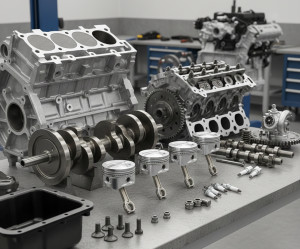
Seeing a diagram side by side with an explanation helps you visualize the entire process. If you are learning engine basics for the first time, reviewing a simple car motor diagram can make everything feel clearer.
Cars and Engines Today
Modern engines are more advanced than ever. They use computer controls, fuel injection and improved combustion technology. Yet the fundamentals remain the same. Engines still need air, fuel and spark. They still rely on pistons and crankshafts. They still use the four stroke cycle that has powered vehicles for generations.
Electric and hybrid vehicles have introduced new systems, but internal combustion engines continue to be widely used and understood. Learning how a car engine works gives you a strong foundation no matter what type of vehicle you drive in the future.
Final Thoughts
A car engine may seem complex, but when you break it down into simple steps it becomes easier to understand. From the cylinders and pistons to the crankshaft and spark plug, every part works together to turn fuel into motion and get you where you need to go. Knowing the basics of a car motor helps you care for your vehicle better and recognize when professional help is needed. If you ever require advanced support such as engine and transmission replacement services, you will be well prepared to make the right decision.For expert assistance and trusted automotive care, turn to Tip Top Hybrid, where your vehicle is always in good hands.
Frequently Asked Questions
A car engine works by burning a mixture of air and fuel inside cylinders to create power. The explosions push pistons which turn the crankshaft and move the vehicle.
The main parts include the engine block, cylinders, pistons, crankshaft, camshaft, valves and spark plugs. These components work together to convert fuel into motion.
A car engine diagram helps you visualize engine basics and understand how parts like pistons, valves and the crankshaft connect and function together.
Knowing engine basics helps drivers identify issues early, understand repairs and make better decisions about maintenance and engine replacement services.
If your vehicle ever needs advanced care such as engine or transmission replacement, you can rely on Tip Top Hybrid for professional and trusted service.