
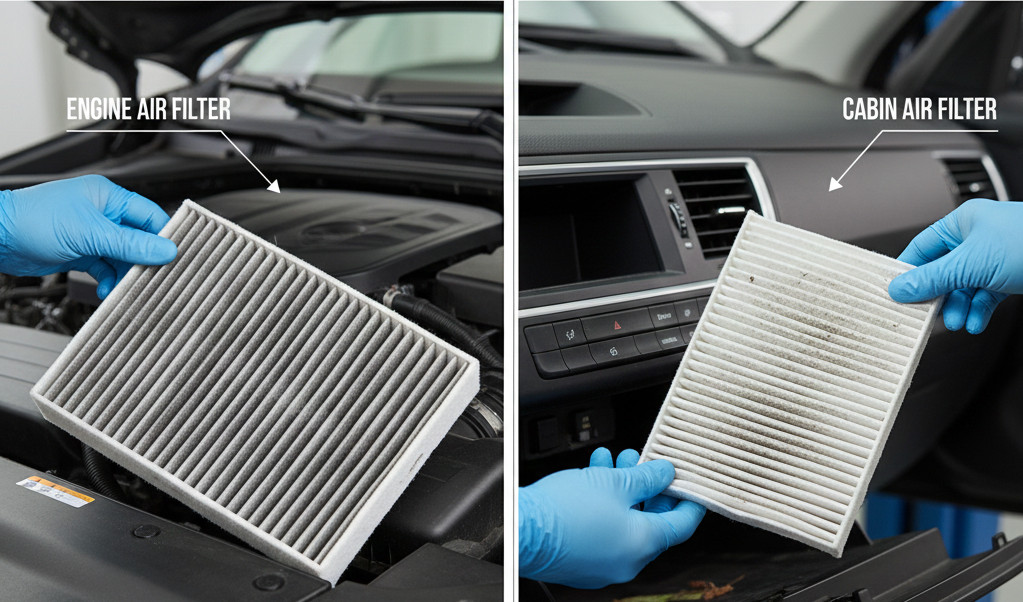
Car owners often hear about the air filter and cabin filter during regular maintenance, yet many are not fully sure what each one does. Both filters play important roles in keeping your vehicle running smoothly and keeping you comfortable inside the cabin. Understanding the difference between a cabin air filter and an engine air filter is important because replacing them at the right time can protect your engine, improve air quality, and even help your car perform better.
If you have ever wondered about cabin vs air filter, or you are trying to learn the purpose of each, this guide breaks it all down in a simple way.
What Is an Engine Air Filter
The engine air filter is designed to protect your engine from contaminants. When your engine runs, it pulls in outside air to mix with fuel for combustion. That outside air contains dirt, dust, sand, pollen, and tiny debris. Without an engine air filter, these particles could enter the engine and cause internal damage.
What Does an Engine Air Filter Do
The engine air filter acts like a protective shield. It stops contaminants from entering the engine so the internal components remain clean and functioning properly. When the engine gets clean air, it can perform efficiently with the right air to fuel mixture. This leads to better fuel economy, smoother acceleration, and improved overall performance.
If the filter becomes clogged, the engine struggles to breathe. This can lead to slow acceleration, increased fuel consumption, and even black smoke from the exhaust. In some cases, your check engine light may turn on due to restricted airflow.
Engine Air Filter Purpose
The main purpose of an engine air filter is to ensure that only clean air enters the engine. Cleaner air means more efficient combustion. Efficient combustion means better power and longer engine life. Neglecting this filter can lead to misfires, rough idling, or expensive repairs down the line. That is why it is essential to inspect it regularly.
What Is a Cabin Air Filter
Your cabin air filter works in a completely different part of the vehicle. Instead of protecting the engine, this filter protects you and your passengers. The cabin air filter cleans the air that enters the interior of your vehicle through the heating, ventilation, and air conditioning systems.
It catches dust, pollen, mold spores, pollutants, and even odors from entering the cabin. If you suffer from allergies or drive in dusty areas, this filter plays a huge role in keeping the air clean and breathable inside your car.
Air Filter in Car What Does It Do for the Cabin
The cabin air filter improves the comfort and health of passengers. It ensures that the air blowing from the vents is fresh and safe to breathe. Without a clean cabin filter, air circulation becomes weak, dust settles quickly on surfaces, and unpleasant smells can linger. You may also notice your air conditioning is not as effective because the blower has to work harder when the filter is clogged.
Cabin Air Filter vs Air Filter
Understanding cabin air filter vs air filter is simple once you know their roles. The cabin air filter protects the people inside the car, while the engine air filter protects the engine itself. Both are essential, but they serve completely different purposes.
Here is a simple breakdown to help you remember:
- The cabin air filter keeps the interior air fresh.
- The engine air filter keeps the engine clean.
- One affects air quality.
- The other affects engine performance.
How to Know When Each Filter Needs Replacement
Both filters eventually get dirty and clogged. Knowing the signs will help you replace them on time.
Signs of a Dirty Engine Air Filter
- Slower acceleration or reduced power
- Black smoke from the exhaust
- Misfiring spark plugs
- Reduced fuel efficiency
- Check engine light turning on
A dirty engine air filter stops clean air from reaching the engine. When that happens, the engine burns more fuel and struggles to maintain power.
Signs of a Dirty Cabin Air Filter
- Weak air flow from vents
- Unpleasant odors inside the cabin
- Dust collecting quickly on surfaces
- Noisy fan as it tries to force air through
- Foggy windows that take longer to clear
A dirty cabin filter makes the ride uncomfortable and affects your heating and cooling system.
How Often Should You Change These Filters
Most manufacturers recommend replacing the engine air filter every twelve thousand to fifteen thousand miles. However, this depends on where you drive. If you travel through dusty roads, heavy traffic, or areas with construction, you may need to replace it more often.
The cabin air filter usually needs replacement every fifteen thousand to twenty thousand miles. Again, the environment matters. Urban areas with pollution or rural areas with dust can cause the filter to clog faster.
Always check your owner’s manual for the exact schedule for your specific vehicle.
Why Changing These Filters Matters
Changing your filters on time protects your car and your comfort. A clean engine air filter ensures your engine breathes properly, runs smoother, and uses fuel more efficiently. It can even extend the life of your engine.
A clean cabin air filter ensures that you and your passengers breathe healthier air. It also helps your air conditioning system work efficiently, giving you better airflow and temperature control.
Skipping these replacements may not seem serious at first, but over time it can lead to costly repairs, uncomfortable driving conditions, and reduced vehicle performance.
Final Thoughts
When you compare engine air filter vs cabin air filter, the main difference becomes clear. The engine air filter protects your engine from harmful contaminants, while the cabin filter protects you from dust and pollution inside the cabin. Even though they perform separate jobs, both are equally important for a smooth and comfortable driving experience.
If you cannot remember the last time you replaced your filters or you have noticed symptoms like slow acceleration, bad cabin odors, weak airflow, or reduced fuel efficiency, it may be time for an inspection. Keeping both your filters clean is one of the simplest ways to maintain your car’s health and your own comfort.
For professional guidance or replacement, always choose a trusted automotive service provider who understands the importance of proper filtration. If you want the job done right with quality care, consider visiting Tip Top Hybrid for expert filter replacement and complete vehicle maintenance.
Frequently Asked Questions
A cabin air filter cleans the air inside your car, while an engine air filter cleans the air going into the engine to protect its internal components.
Most cabin filters should be replaced every fifteen thousand to twenty thousand miles, while engine filters usually need replacement every twelve thousand to fifteen thousand miles depending on driving conditions.
A clogged engine air filter can reduce acceleration, lower fuel efficiency, cause rough idling, and even trigger the check engine light.
Yes, a dirty cabin air filter reduces air quality inside your car and can trigger allergies, breathing discomfort, and unpleasant odors.
Absolutely. A clean engine air filter boosts fuel efficiency and power, while a clean cabin filter improves airflow, comfort, and air quality for passengers.