
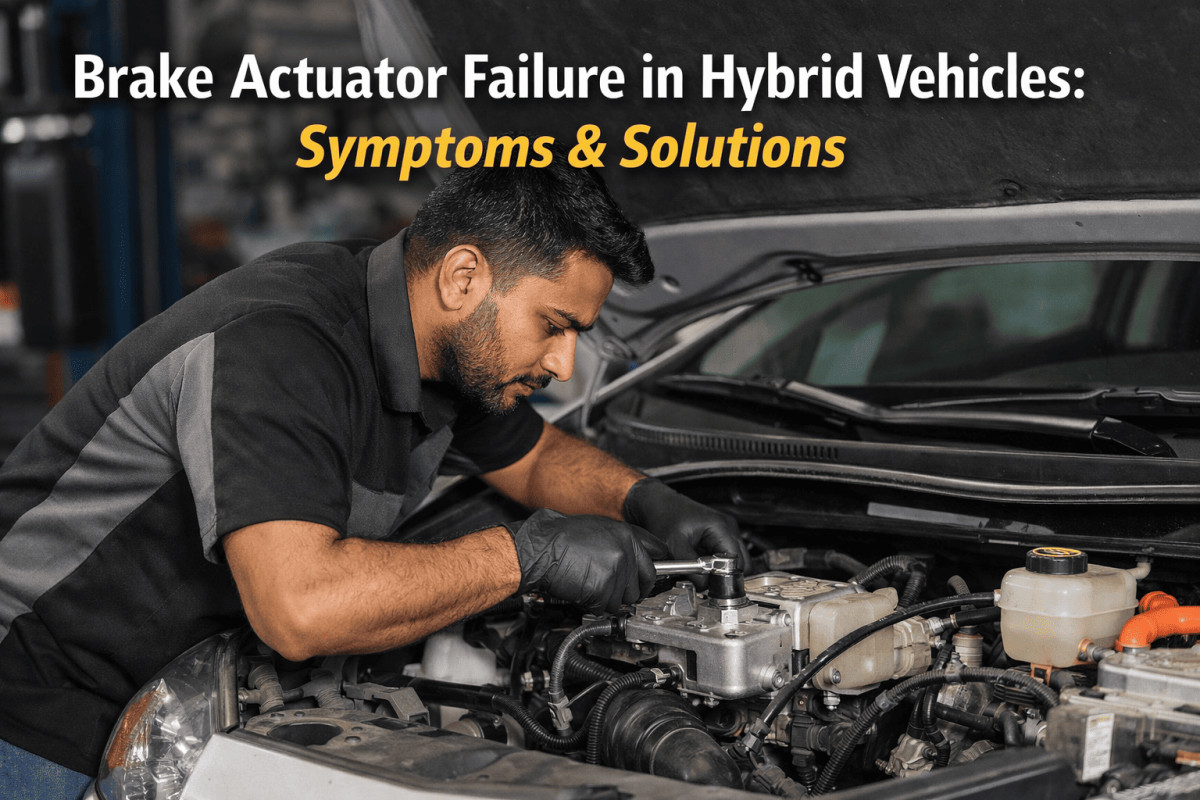
Hybrid vehicles are known for their fuel efficiency, advanced technology, and eco-friendly performance. However, like any modern vehicle system, hybrids have specialized components that can develop issues over time. One of the most critical components in a hybrid braking system is the brake actuator. When it fails, it can affect not only performance but also safety.
If you drive a hybrid vehicle, understanding the symptoms and solutions of brake actuator failure can help you avoid costly repairs and dangerous driving conditions.
What Is a Brake Actuator in a Hybrid Vehicle?
In hybrid vehicles, the brake actuator plays a crucial role in managing both regenerative braking and traditional hydraulic braking. Unlike conventional vehicles, hybrids use regenerative braking to recover energy and recharge the battery. The brake actuator helps control brake pressure, distribute force properly, and coordinate between regenerative and friction braking systems.
Because hybrid braking systems are more complex, the brake actuator is more advanced than in standard gas-powered vehicles.
Common Symptoms of Brake Actuator Failure
Brake actuator issues usually develop gradually, but sometimes they can appear suddenly. Here are the most common warning signs:
1. Brake Warning Light or ABS Light
If your dashboard displays the ABS, brake system, or traction control warning light, it may indicate actuator failure. Hybrid vehicles often store diagnostic trouble codes that point directly to brake actuator issues.
2. Unusual Brake Noises
You may hear:
- Clicking sounds
- Buzzing or humming noises
- Constant pump motor sounds
These noises often come from the actuator pump working harder than normal.
3. Spongy or Hard Brake Pedal
A failing brake actuator can cause inconsistent brake pedal feel. The pedal may feel unusually soft (spongy) or extremely stiff when pressed.
4. Reduced Braking Performance
If your vehicle takes longer to stop or braking feels inconsistent, it could be due to improper pressure distribution within the braking system.
5. Frequent Pump Activation
If you notice the brake pump activating more often than usual, it may indicate internal leakage within the actuator assembly.
Why Do Hybrid Brake Actuators Fail?
Several factors contribute to brake actuator failure:
- Internal hydraulic leaks
- Accumulator failure
- Electrical control module malfunction
- Wear and tear over time
- Contaminated brake fluid
Hybrid vehicles, especially models like the Toyota Prius, Lexus hybrids, and Camry Hybrid, are known to experience actuator issues after higher mileage.
Is It Safe to Drive with a Bad Brake Actuator?
Driving with a failing brake actuator is risky. While your vehicle may still stop, braking performance can become unpredictable. In emergency situations, compromised braking can increase stopping distance and reduce vehicle control.
Additionally, ignoring the issue can lead to further damage to other braking components, increasing repair costs.
For safety reasons, it is strongly recommended to have the system inspected as soon as warning signs appear.
Repair vs Replacement: What Are Your Options?
When facing brake actuator failure, vehicle owners typically have two options:
1. Repair (If Applicable)
In some cases, minor electrical or sensor issues can be repaired without full replacement. However, most actuator failures involve internal hydraulic problems that require replacement.
2. Full Brake Actuator Replacement
This is the most common solution. Replacing the actuator assembly ensures:
- Proper brake pressure regulation
- Restored ABS functionality
- Improved regenerative braking performance
- Enhanced overall safety
While dealership repairs can be expensive, specialized hybrid repair shops often provide more cost-effective solutions using OEM or high-quality replacement parts.
How Much Does Brake Actuator Repair Cost?
Brake actuator replacement can range from moderate to expensive depending on:
- Vehicle make and model
- Labor costs
- OEM vs aftermarket parts
- Location
Hybrid-specific repair shops can often save customers significant money compared to dealerships.
Early diagnosis is key. Catching the issue early may prevent further damage and additional expenses.
Preventing Brake Actuator Problems
While not all failures are preventable, proper maintenance can extend the life of your braking system:
- Regular brake fluid inspection and replacement
- Addressing warning lights immediately
- Routine hybrid system diagnostics
- Avoiding aggressive driving habits
Preventative care can significantly reduce the risk of sudden system failure.
Why Professional Hybrid Specialists Matter
Hybrid braking systems are more complex than traditional braking systems. Not every mechanic has the proper tools, diagnostic equipment, and hybrid-specific expertise to accurately repair brake actuator problems.
Choosing a hybrid specialist ensures:
- Accurate diagnostics
- Proper calibration of braking systems
- Safe and reliable repair work
- Long-term performance improvement
Conclusion
Brake actuator failure in hybrid vehicles is a serious issue that should never be ignored. Warning lights, unusual noises, inconsistent pedal feel, and reduced braking performance are all signs that something may be wrong. Early diagnosis and professional repair can prevent safety risks and costly damage.
If you are experiencing brake actuator issues or need expert hybrid repair services, Tip Top Hybrid is here to help. Our experienced hybrid specialists provide reliable diagnostics, cost-effective solutions, and high-quality repairs to keep your vehicle running safely and efficiently. Contact Tip Top Hybrid today to schedule your inspection and restore your hybrid’s braking performance with confidence.