
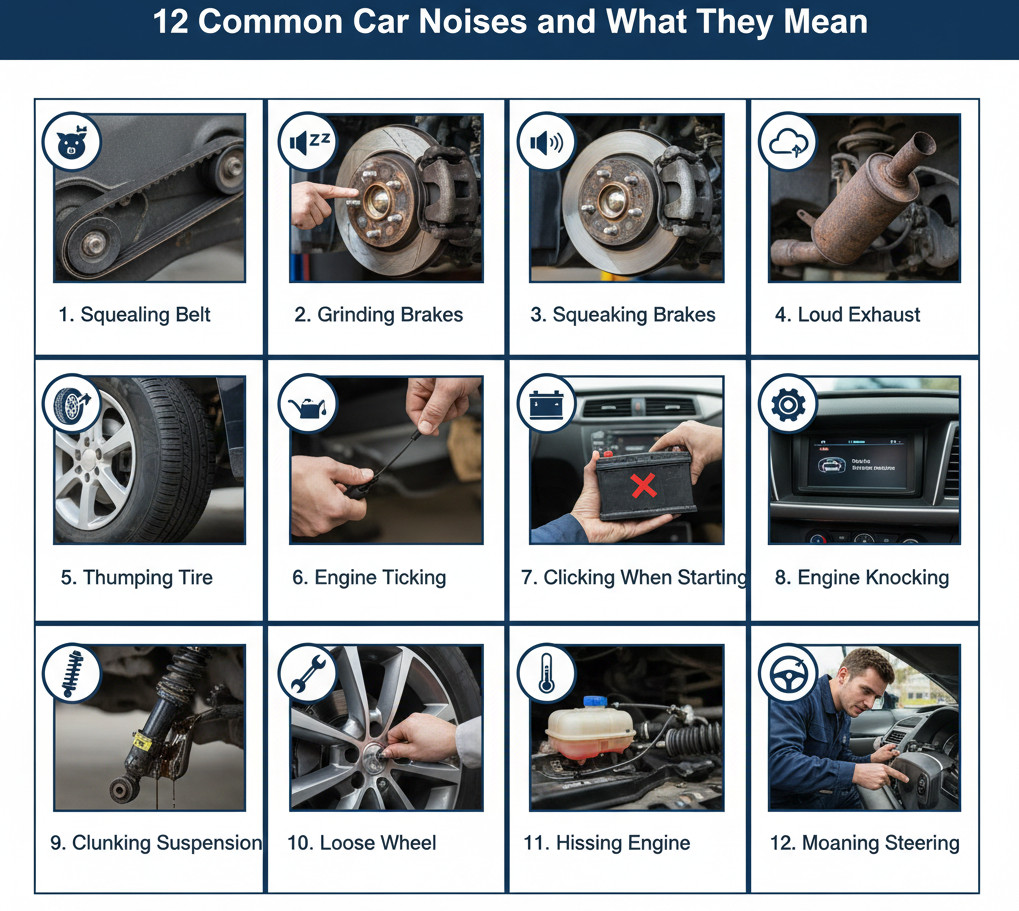
Your car communicates problems long before it breaks down completely. Unusual sounds are often the earliest warning signs that something is wearing out, running low, or failing altogether. While some noises are harmless, others signal issues that can become dangerous or expensive if ignored.
Understanding what these sounds mean helps you make smarter repair decisions and avoid sudden breakdowns. Below is a complete, practical guide to the most common car noises, what causes them, and when to take action, explained clearly by the service team at Tip Top Hybrid.
Why You Should Never Ignore Unusual Car Noises
Modern vehicles are engineered to operate smoothly and quietly. When a new sound appears, it usually means friction, looseness, wear, or pressure where there should not be any. Many automotive authorities and repair networks agree that early noise diagnosis often prevents:
- Costly secondary damage
- Unsafe driving conditions
- Sudden roadside failures
- Reduced fuel efficiency
Ignoring a small noise today can easily turn into a major repair tomorrow.
12 Common Car Noises Explained
1. Squealing or Screeching When Braking
(Brake pads or rotors wear)
A high pitched squeal when braking is one of the most common car noises. Most brake pads are designed with wear indicators that intentionally make noise when the pad material becomes thin. This alerts drivers before the pads are completely worn out.
If the sound continues or becomes louder, it may indicate glazed rotors or hardened brake pads. Addressing this early helps avoid rotor damage and keeps braking performance consistent.
2. Grinding Noise While Braking
(Severely worn brake components)
Grinding usually means the brake pads are worn down to bare metal. At this point, metal is grinding directly against the brake rotor, which can cause severe damage in a short amount of time.
This noise requires immediate attention. Continued driving can lead to longer stopping distances, unsafe braking, and expensive rotor or caliper replacement.
3. Clicking Noise When Turning
(CV joint or axle issues)
A clicking or popping sound while turning, especially at low speeds, commonly points to a failing CV joint. These joints allow the wheels to rotate smoothly while steering and accelerating.
When the protective boot cracks, grease escapes and dirt enters, leading to joint wear. If ignored, a failed CV joint can eventually cause loss of power to the wheels.
4. Knocking or Pinging From the Engine
(Improper combustion or engine problems)
Knocking or pinging noises from the engine often result from abnormal combustion. Common causes include incorrect fuel octane, carbon buildup, overheating, or ignition timing issues.
Persistent engine knocking should never be ignored, as it can lead to piston or bearing damage over time.
5. Hissing Sound From Under the Hood
(Vacuum leak or coolant issue)
A hissing noise can occur while driving or shortly after shutting the engine off. When present during operation, it often indicates a vacuum leak from a hose or fitting. After shutdown, it may be related to coolant pressure escaping from the cooling system.
Vacuum leaks can affect engine performance and fuel efficiency, while coolant leaks risk overheating.
6. Rattling Noise While Driving
(Loose components or exhaust heat shields)
Rattling noises are often caused by loose exhaust heat shields, brackets, or underbody components. These sounds may be more noticeable during acceleration or when driving over uneven surfaces.
Although some rattles are minor, others can indicate components that may detach if left unattended.
7. Whining or Humming That Increases With Speed
(Wheel bearing or transmission issues)
A low pitched humming or whining that gets louder as speed increases often points to worn wheel bearings. In some cases, it may also relate to transmission or differential issues.
Wheel bearings support vehicle weight and allow smooth wheel rotation. When they fail, handling and safety are compromised.
8. Clunking Noise Over Bumps
(Suspension or steering component wear)
Clunking sounds when driving over bumps usually indicate worn suspension or steering components. Common causes include bad shocks, struts, sway bar links, control arms, or ball joints.
These parts are critical for stability and steering control. Excessive wear can negatively affect alignment and tire wear.
9. Thumping or Slapping Noise
(Underinflated tire or tire damage)
A rhythmic thumping or slapping sound often originates from the tires. Underinflated tires, flat spots, internal belt damage, or uneven tread wear are common causes.
Driving on damaged tires reduces traction and increases the risk of a blowout, especially at highway speeds.
10Roaring Noise From Under the Car
(Exhaust system damage)
A loud roaring sound may indicate a hole, crack, or loose connection in the exhaust system. Exhaust leaks not only increase noise but can allow harmful gases to enter the cabin.
Prompt inspection helps prevent emissions issues and protects passenger safety.
11. Ticking Sound From the Engine
(Low oil level or valvetrain issues)
Engine ticking often occurs when oil levels are low or oil pressure is insufficient. Without proper lubrication, metal components create ticking or tapping noises.
Other causes may include valvetrain wear or injector noise. Maintaining proper oil levels is one of the simplest ways to prevent long term engine damage.
12. Screaming or Chirping Under the Hood
(Worn or loose serpentine belt)
A high pitched chirping or screaming noise usually comes from a worn, loose, or misaligned serpentine belt. This belt powers critical components like the alternator, water pump, and power steering system.
If the belt fails completely, the vehicle may lose charging capability or overheat.
When a Car Noise Means Immediate Repair Is Needed
Certain noises signal urgent problems and should not be delayed:
- Grinding brakes
- Loud engine knocking
- Sudden roaring exhaust sounds
- Wheel bearing humming that worsens quickly
- Severe suspension clunks affecting steering
Immediate inspection helps prevent safety risks and costly repairs.
When It’s Safe to Monitor the Noise
Some noises can be monitored briefly if they are mild and consistent:
- Light brake squeal with plenty of pad life
- Minor rattles from heat shields
- Occasional belt chirps in cold weather
Even then, scheduling a professional inspection is recommended to confirm the cause.
How a Professional Diagnosis Can Save You Money
Accurately diagnosing a noise early often prevents damage to surrounding components. A professional technician can:
- Identify the true source of the sound
- Prevent unnecessary part replacements
- Catch related issues before they escalate
At Tip Top Hybrid, experienced technicians use proven diagnostic methods to pinpoint issues efficiently, especially on hybrid vehicles where precision matters.
Final Thoughts: Listen to Your Car Before It Breaks Down
Your car rarely fails without warning. Most breakdowns are preceded by unusual sounds that drivers ignore or misunderstand. Learning to recognize these noises empowers you to act early, stay safe, and protect your investment.
If your vehicle is making a sound you cannot identify, trust your instincts and have it checked. Listening today can save you time, money, and stress tomorrow.
Tip Top Hybrid is here to help keep your car quiet, reliable, and running at its best.